
Why Full-Service Construction Company Delivers Better Value.
Debunking the myth that DIY project management saves you money.
If you are planning a major renovation or a custom build, you have probably asked yourself this question: Is it really worth paying a full-service construction company, or should I just manage the project myself and hire the trades (general contractor, architect, engineer, project manager, etc.) directly?
Home owners often assume that managing a construction project independently, hiring separate architects, engineers, and subcontractors, will reduce costs by eliminating the general contractor’s fee. Industry data suggests the opposite is true.
The math seems simple. If you cut out the “middleman”, you save on their overhead and fees, right?
Wrong.
In reality, trying to save money by juggling multiple contracts usually does the exact opposite. It doesn’t just cost you more cash, it costs you time, sleep, and your own sanity.
Fact: Hiring a full-service construction company like Millhawlk is actually less expensive in the long run.
Let’s examine the actual cost factors in residential and commercial construction projects, comparing the fragmented “self-managed” approach against the integrated full-service model.
The Fragmented Approach: What Self-Management Actually Costs
When homeowners choose the self-managed path, they typically hire separate professionals: an architect for design, a structural engineer for calculations, and various subcontractors for construction. The homeowner acts as the general contractor, project manager, and coordinator.
On paper, this appears economical. In practice, the hidden costs accumulate rapidly.
The Budget Reality
Industry data reveals a sobering picture of project outcomes. According to KPMG’s global construction survey, only 25% of construction projects finish within 10% of their original budget. The remaining 75% exceed budget, often substantially.
The primary driver of budget overrun? Poor coordination between design and construction teams—a problem inherent to fragmented delivery models.
| Cost Driver | Fragmented Approach |
|---|---|
| Projects finishing within 10% of budget | 25% |
| Projects exceeding budget | 75% |
| Primary cause of overrun | Poor design-construction coordination |
The Multiple Contract Problem
In a fragmented model, you pay multiple parties separately. Each party charges for:
- Their core service (design, engineering, construction)
- Coordination time with other parties
- Communication overhead
These coordination costs are typically 5% to 10% of project value in fragmented delivery, but are bundled into a single fee in integrated models. The homeowner pays these costs indirectly through multiple invoices without realizing they are paying for the same coordination function multiple times.
The Change Order Trap
Fragmented projects experience more change orders because:
- The design team is not responsible for construction execution
- Contractors are not involved during design
- Bid documents often contain gaps or conflicts
- Field conditions require improvisation
Change orders average 5% to 15% of base contract value in fragmented projects. Each change order represents money that wasn’t budgeted for, often arising from problems that could have been prevented with better early coordination.
The Rework Penalty
Industry research indicates that rework accounts for approximately 5% to 10% of total construction costs. Common sources include:
- Design that doesn’t meet code requirements
- Structural elements that don’t align with architectural intent
- MEP systems that conflict with structural elements
- Incomplete or unclear specifications
Rework discovered during construction costs significantly more to correct than the same issue addressed during design. Research shows the cost multiplier for design changes discovered during construction ranges from 3 to 10 times the cost of making the change during design.
The Subcontractor Markup Stack
When a homeowner hires subcontractors directly, each subcontractor includes a markup for:
- Their own overhead
- Profit margin
- Supervision and management
These markups stack on top of each other. The plumber adds their margin. The electrician adds theirs. The framer adds theirs. The homeowner pays these individual markups without the efficiency of a single coordinated management structure.
Schedule Overruns
A review of over 70,000 construction schedules found that 76% of projects finish later than planned. Delays are most commonly attributed to:
- Design errors discovered during construction
- Coordination failures between trades
- Delays in submittal approvals
- Rework caused by incomplete or inaccurate plans
Schedule delays have real financial consequences: extended rental costs, additional loan interest payments, and prolonged disruption to daily life.
The Fragmented vs. Integrated Comparison
| Aspect | Self-Managed (Fragmented) | Full-Service (Integrated) |
|---|---|---|
| Contracts | Multiple (architect, engineer, subs) | Single contract, single entity |
| Accountability | Owner acts as coordinator | Single point of responsibility |
| Design-Construction Gap | Sequential (design then build) | Concurrent (integrated) |
| Change Order Risk | High (5-15% of contract value) | Reduced (1-3% of contract value) |
| Coordination Costs | Hidden across multiple invoices | Bundled in single transparent fee |
| Rework | 5-10% of total project cost | Significantly reduced |
| Schedule Performance | 76% finish late | Reliable and predictable |
The Integrated Approach: How Full-Service Construction Protects Your Investment
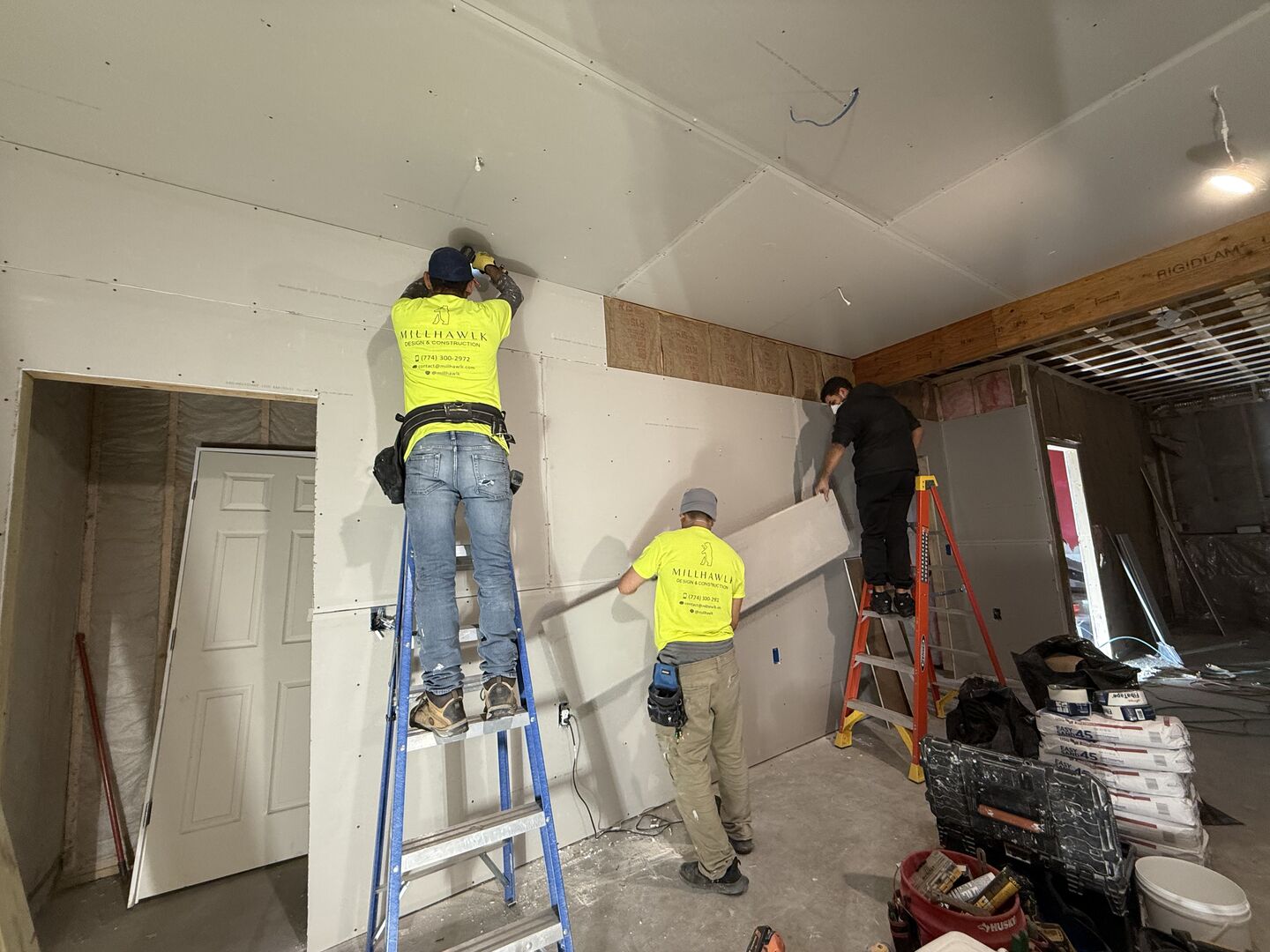
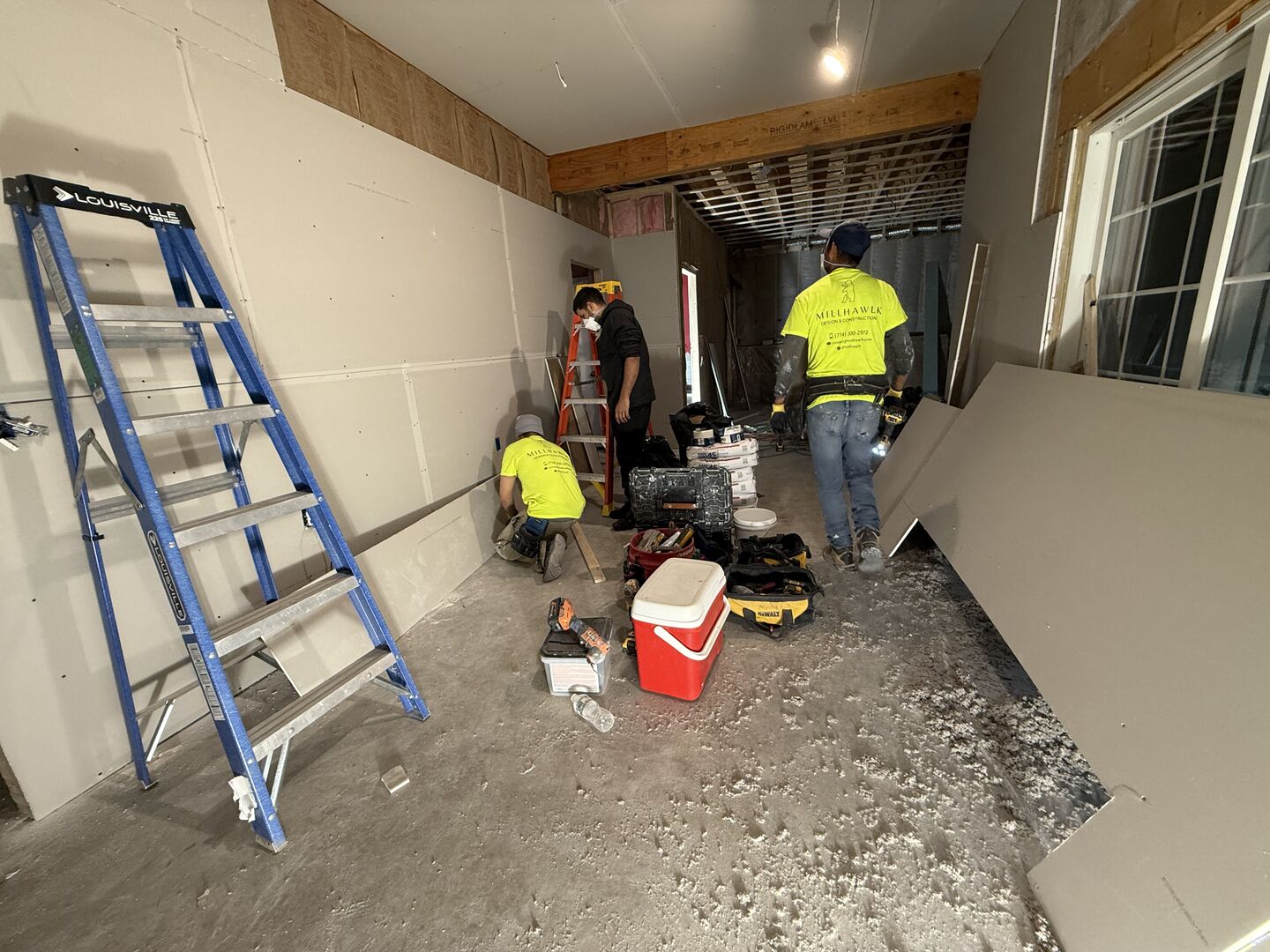
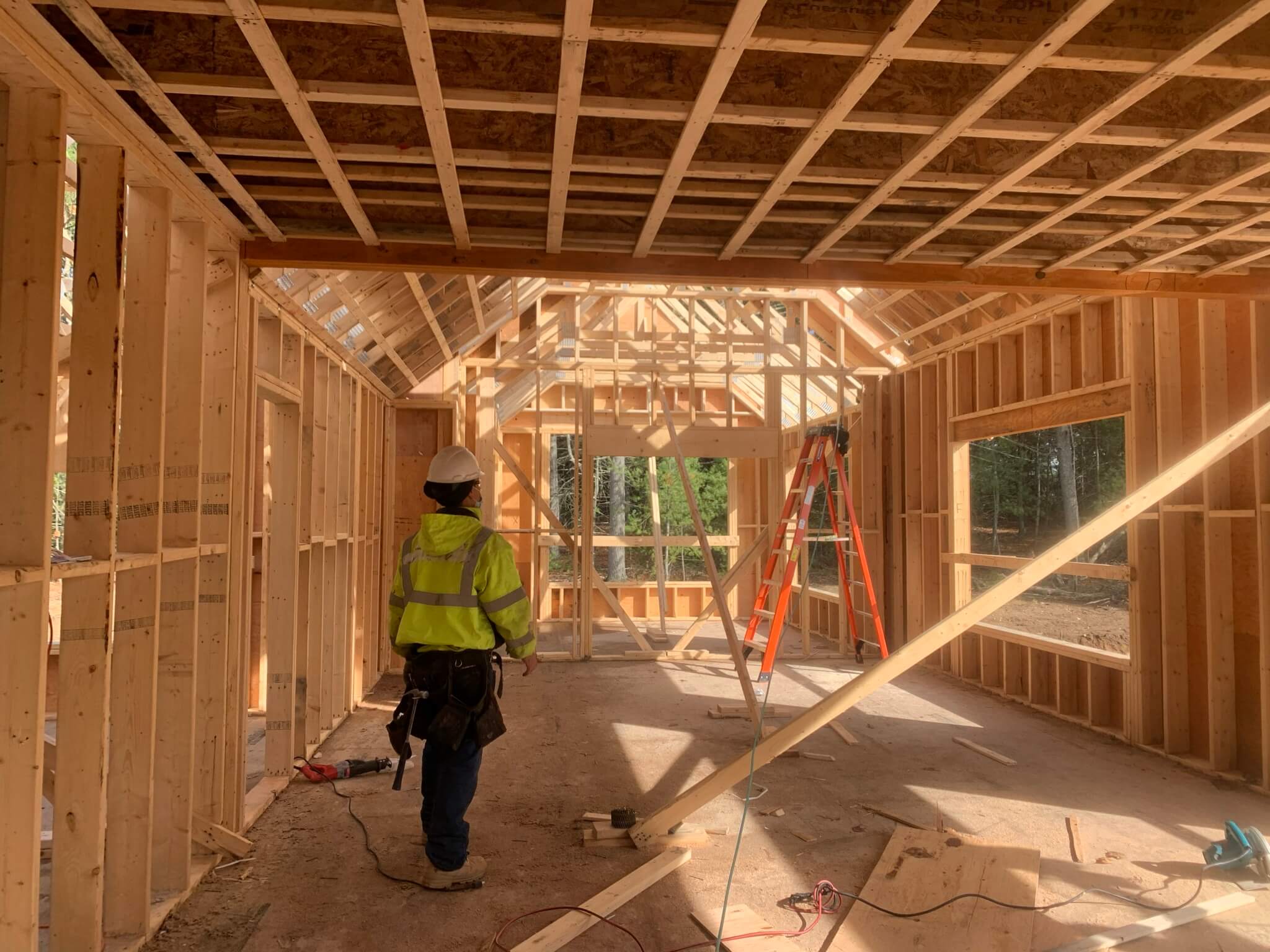
Full-service construction firms like Millhawlk provide a fundamentally different delivery model. Rather than assembling separate parties and hoping they coordinate effectively, the integrated approach brings all disciplines together under one roof with one point of accountability.
Single Contract, Single Responsibility
You sign one contract with one entity. Millhawlk is responsible for all outcomes—design, engineering, construction, and project management. There is no passing of responsibility between parties. If something goes wrong, you have one phone number to call and one company accountable for fixing it.
Concurrent Design and Engineering
Our architects and structural engineers collaborate from the earliest stages of design. This ensures:
- Designs are structurally feasible before construction begins
- Code compliance is verified early
- MEP systems are coordinated with structural and architectural plans
- The need for redesign during construction is minimized
Problems are caught on paper, not in your wallet.
Reduced Change Orders
Because our design and construction teams work together continuously, potential issues are identified early and resolved at lower cost. Integrated projects typically see change orders in the 1% to 3% range—substantially lower than the 5% to 15% common in fragmented delivery.
Eliminating Stacked Markups
You pay one company, with one transparent contract, instead of multiple invoices from different parties who may charge for project management and coordination on top of their services. The efficiency of a single management structure eliminates duplicate administrative costs.
In-House Project Management
A dedicated project manager coordinates all subcontractors, material deliveries, and schedule activities. You do not need to:
- Schedule trades
- Coordinate deliveries
- Resolve on-site conflicts
- Manage submittals and approvals
Our project managers handle the complexity so you don’t have to.
Faster, More Predictable Completion
Projects using integrated delivery methods demonstrate more reliable schedule performance. Single-point accountability creates incentives for timely completion that fragmented models lack. There are no delays waiting for an architect to answer a contractor’s question, or for an engineer to review a field change. We are a one-stop shop.
Quality and Defect Reduction
Integrated delivery models have been shown to reduce construction defects. When designers and builders communicate continuously, potential issues are identified earlier and resolved at lower cost. The result is higher quality workmanship and fewer callbacks.
Clearer Dispute Resolution
In a single-contract model, you have one party to hold accountable. Dispute resolution is straightforward. You do not need to navigate disagreements between an architect, engineer, and contractor about whose fault a problem is. We are entirely accountable for the final result.
The Evidence: Comparing Delivery Models
| Cost Category | Fragmented Model | Millhawlk (Integrated Model) |
|---|---|---|
| Coordination / Management | Hidden across multiple invoices | Single transparent fee |
| Rework from design errors | 5-10% of project cost | 1-3% of project cost |
| Change orders | 5-15% of base contract | 1-3% of base contract |
| Schedule overrun | 76% of projects | Significantly reduced |
| Dispute frequency | Higher | Lower |
Sources: KPMG Global Construction Survey, Construction Industry Institute
What This Means for Your Project
The data is clear: the fragmented, self-managed approach to construction is statistically more likely to exceed budget, exceed timeline, and result in disputes. The “savings” from eliminating the general contractor’s fee are typically offset by higher coordination costs, more frequent change orders, rework, and delays.
Full-service integrated delivery offers measurable advantages:
- Single point of accountability
- Reduced change orders
- Earlier problem identification
- Faster project completion
- Clearer cost control
- Higher quality outcomes
For property owners evaluating how to deliver their construction project, the evidence suggests that the integrated approach provides better financial outcomes despite appearing more expensive upfront.
Millhawlk provides integrated design-build services for residential and commercial projects. Our team of architects, engineers, and construction professionals works together from start to finish under a single contract. Contact us today to discuss your project requirements and receive a transparent, fixed-price quote.
Millhawlk Construction Services
- Siding Replacement
- Windows Replacement
- Window Installation
- Roof Installation
- Roof Replacement
- Roof Repair
- Interior Painting
- Exterior Painting
- Rough Framing
- Stick Framing
- Flooring Installation
- Tile Installation
- Drywall Installation
- Sunroom Construction
- Floor Plan Drawing
- House Plans
Sources: KPMG Global Construction Survey (2018-2023); McGraw-Hill Construction, “Managing the Cost of Design Changes”; Construction Industry Institute, “Rework in Construction Projects”; FMI Corporation, “Construction Disputes Report.”